Authorship Forensics


The Authorship Forensics Project addresses this challenge by analyzing linguistic patterns in writing. Using statistical natural language processing and machine learning models, the system identifies distinctive patterns in text to help determine whether it was written by a human or generated by AI.


About the Project

The Authorship Forensics project explores how writers develop distinctive language patterns and how these patterns can be used to identify the origin of a text. The system applies Statistical Natural Language Processing (SNLP) techniques to extract linguistic features such as n-grams and part-of-speech (POS) patterns, and then trains Convolutional Neural Network (CNN) models to classify texts as either human-written or AI-generated. By analyzing these linguistic patterns and stylistic characteristics, the system can detect subtle differences in writing behavior that may not be easily recognizable to human readers, helping researchers and educators better understand the source and authenticity of written content.

  • The Authorship Forensics Portal allows educators and researchers to upload their own datasets for analysis and experimentation.
  • Users can train authorship detection models in a relatively short time and access trained models that are publicly available through the portal.
  • The system analyzes linguistic patterns in text to determine whether the content is more likely written by a human or generated by artificial intelligence.
  • The portal provides an interactive environment where users can explore authorship detection methods and investigate how linguistic features help distinguish human writing from AI-generated content.

Terms of Use

The VIP Research Group is a research group led by Prof. Maiga Chang (https://www.athabascau.ca/science-and-technology/our-people/maiga-chang.html) at School of Computing and Information Systems, Athabasca University. This "multi-sentence similarity calculation web service" (https://ws-nlp.vipresearch.ca/) is one of the research group's works. The research group does have follow-up research plan to improve it and further use it in other research projects.

Almost all of Prof. Chang's works are open access (or open source). The web service (https://ws-nlp.vipresearch.ca/) is now open access and there is no plan to make it open source. The web service is open access and running on a self-sponsored server, as all of other research projects (see http://maiga.athabascau.ca/#advanced) they will be always online, improving, and accessible as long as the cost can be affordable and covered by Prof. Chang.

Of course if in any case just like the access volume of the web service becoming high or any business/commercial takes advantage of using it to make money, then the term of using the web service may look for changes; for examples, donations, personal/academic/business license and subscription modes, etc. However, it is really too early to say that.

About Us

...
Our Mission

Our research aims to bring a sentence similarity service which would measure the closeness of two or more sentence or paragraph using Natural Language Processing and WordNet

...
Dr. Maiga Chang
Supervisor

Dr. Maiga Chang is a Full Professor in the school of Computing and Information Systems at Athabasca University, Canada

...
Research Goal

The research focuses on creating a service capable of verifying valid n-grams from a given set of words. The service is capable of extracting valid n-grams and their part of speech(POS) from the words provided by the user which can be used for verification purposes.

Our Team

...
Rob Schmidt
2022-2026

Rob Schmidt is an Athabasca University undergraduate student from Calgary, Alberta, Canada. He may be pursuing a master's degree in Computer Science and has a particular interest in game based design, learning and research.

Owen
Owen Li
2025

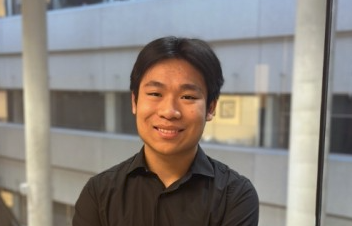
Owen is a software developer in the School of Applied Science at Queen’s University, Canada, where he builds innovative software to support research and technology initiatives.

...
Kevin Haghighat
2024-2025

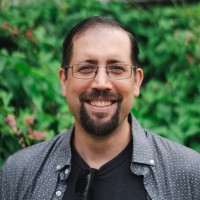
Kevin Haghighat completed his Master of Science in Information Systems (MSc IS) at Athabasca University, where his recent research centred on Authorship Forensics as a member of the VIP Research Group. His work examined computational methods for identifying linguistic patterns and writing signatures, contributing to emerging approaches in authorship verification and analysis.

...
Odinakachukwu Nzekwe
2025

Odinakachukwu Nzekwe is an undergraduate student at Athabasca University, pursuing a degree in Computer Science with a focus on Cybersecurity. Based in Mississauga, Ontario Canada, Odinakachukwu is passionate about digital security, ethical hacking, and the ever-evolving landscape of cyber threats.

...
Hsiang-han Cheng (Eleanor)
2024

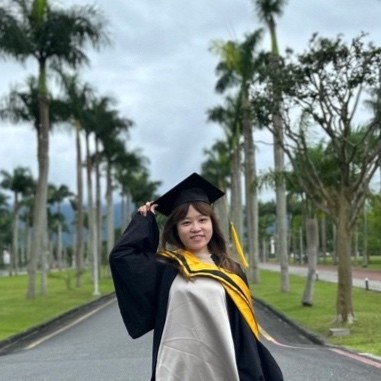
I am Hsiang-han Cheng, a second-year master’s student in the Department of Computer Science and Information Engineering at Donghua University.

...
Kang-Fu Zheng (Wayne)
2024

Kang-Fu Zheng is a second-year Master's degree student at National Formosa University, living in Tainan, Taiwan. He obtained his Master's degree in Electrical Engineering in Taiwan.

...
Greg Fredin
2023

Greg Fredin is an Athabasca University undergraduate student living in Edmonton, Alberta, Canada. He is also getting a minor in psychology which will help with his interest in further AI research.

Videos

Frequently Asked Questions

  • he Authorship Forensics Portal is an AI-powered research platform that helps identify whether a piece of writing is written by a human or generated by AI models such as ChatGPT, ChatGPT 3.5, and ChatGPT 4. It uses Statistical NLP and CNN-based authorship analysis techniques.

  • The system uses a three-stage authorship detection process. First, it extracts Part-of-Speech (PoS) patterns and n-gram language features from the input text. Next, these patterns are transformed into visual distributions that represent grammatical usage across the document. Finally, a Convolutional Neural Network (CNN) model analyzes these distributions to classify whether the text is more likely written by a human or generated by AI.

  • Yes. Teachers and researchers can upload their own labeled datasets through the portal and train custom models based on their needs. The system allows users to configure key training parameters before starting the training process. Once trained, the model can be kept private for personal use or made public for other educators and researchers to access and use.

  • Training time depends mainly on the classification setup and dataset size. Based on our current research, 2-class models can be trained in under 1 minute, while 3-class models typically take around 5 to 10 minutes. In general, most models are fully processed and ready within 30 minutes or less. However, with larger datasets and additional features, training time could potentially take up to 1 hour per model.

  • No AI detection system is 100% perfect. The portal provides high-confidence predictions and precision-focused results, but users should use the results as supportive evidence rather than final judgment.